Black and White Students in Maine Attend School at Nearly Identical Rates
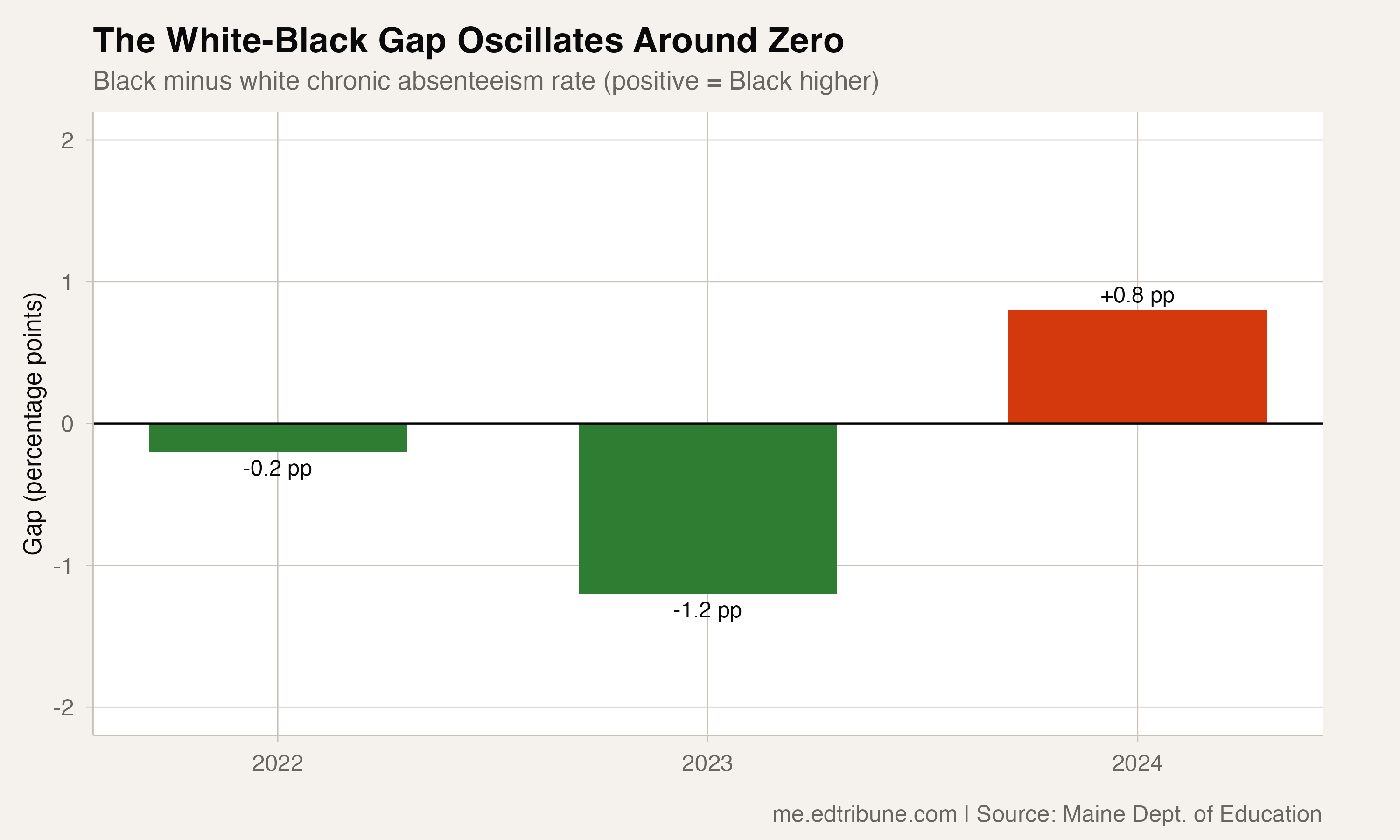
Maine's Black and white students are chronically absent at near-identical rates, a parity rooted in the state's Somali, Congolese, and Sudanese immigrant communities.
Data-Driven Education Journalism for the Pine Tree State
Education News & Data
Local education reporting from every corner of Maine, grounded in Maine Department of Education data.
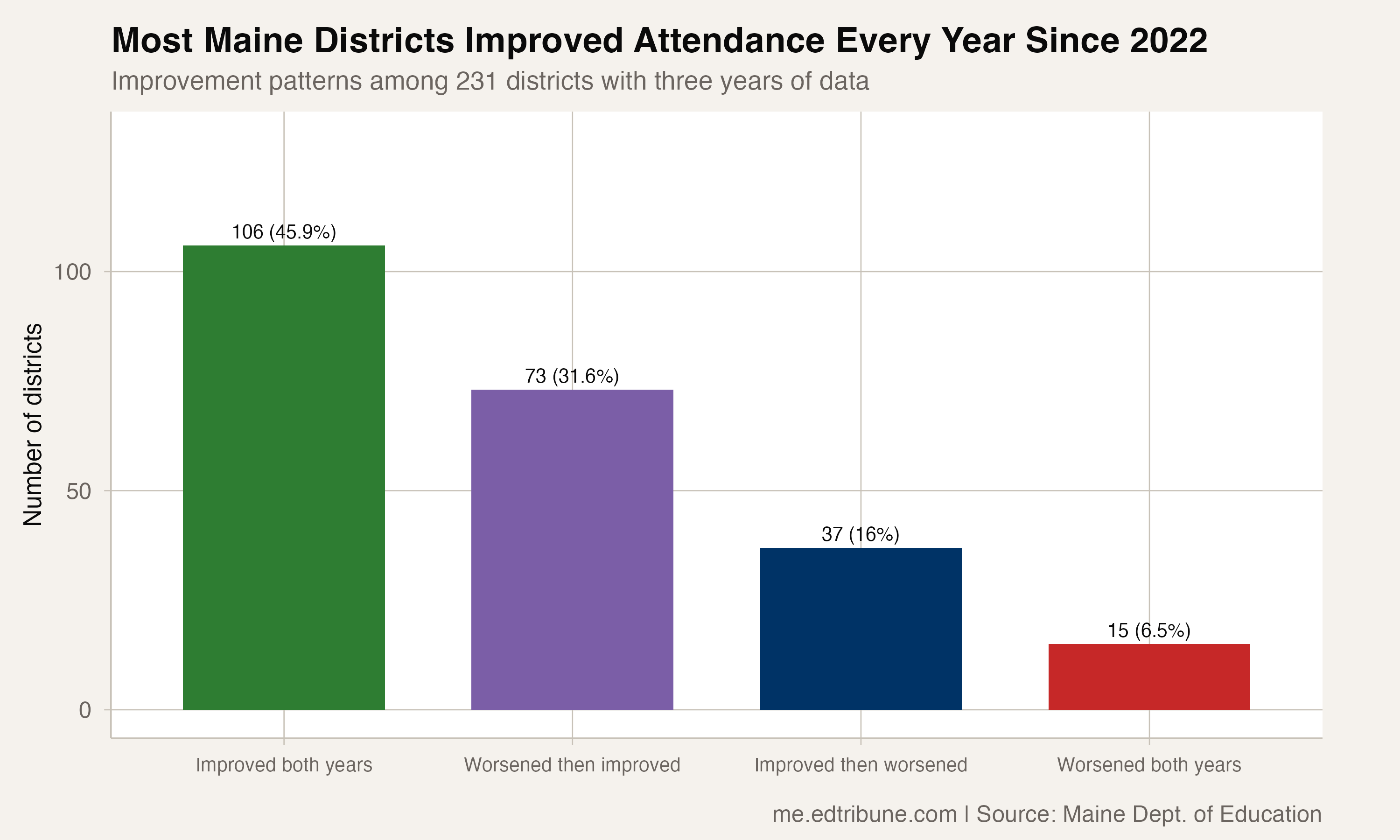
Nearly half of Maine districts with three years of data improved chronic absenteeism in both consecutive years. Only 15 worsened in both. The breadth of improvement suggests systemic recovery, not isolated success stories.
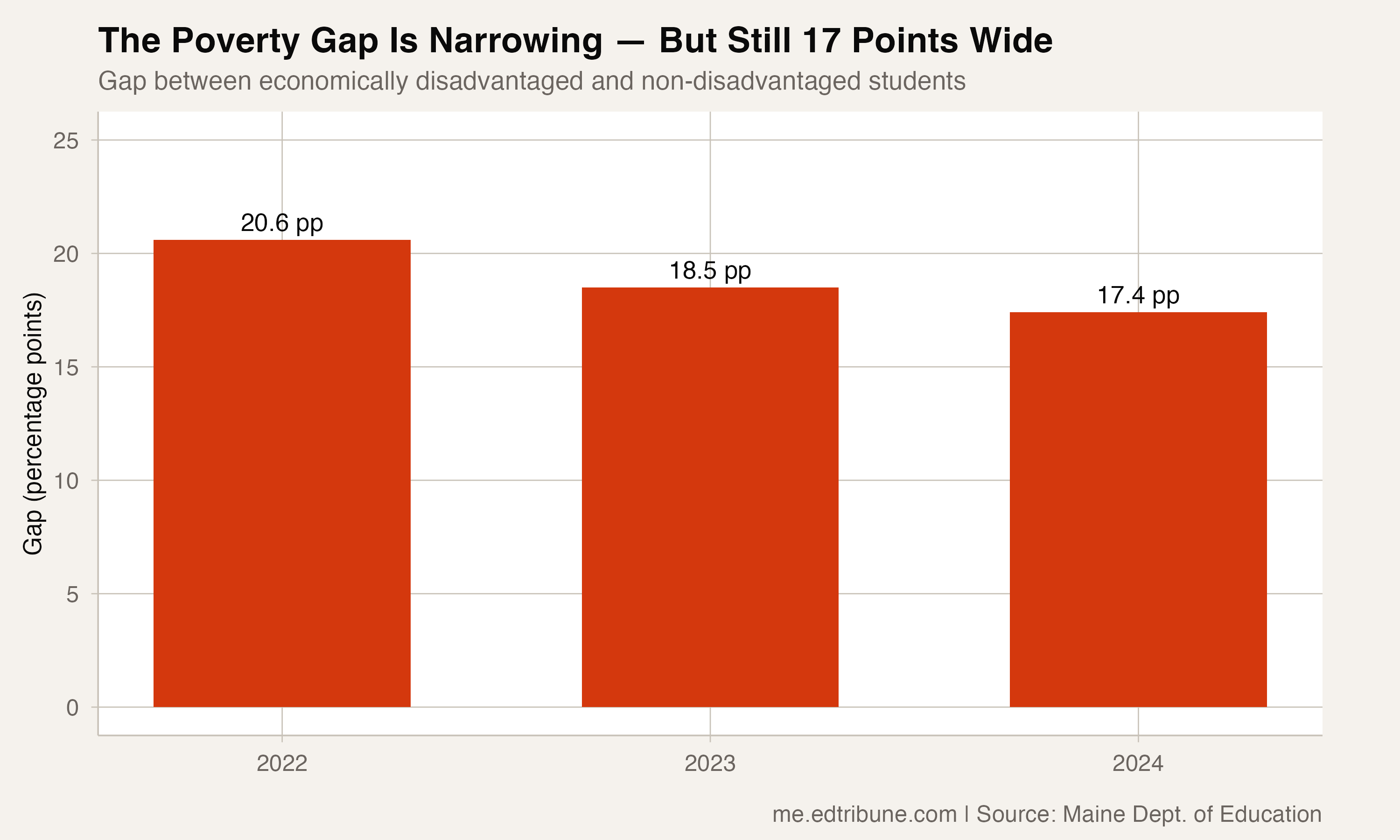
Economically disadvantaged students in Maine are chronically absent at 35.0%, nearly double the 17.6% rate for their peers. The gap narrowed 3.2 points in two years but remains the state's deepest structural divide.
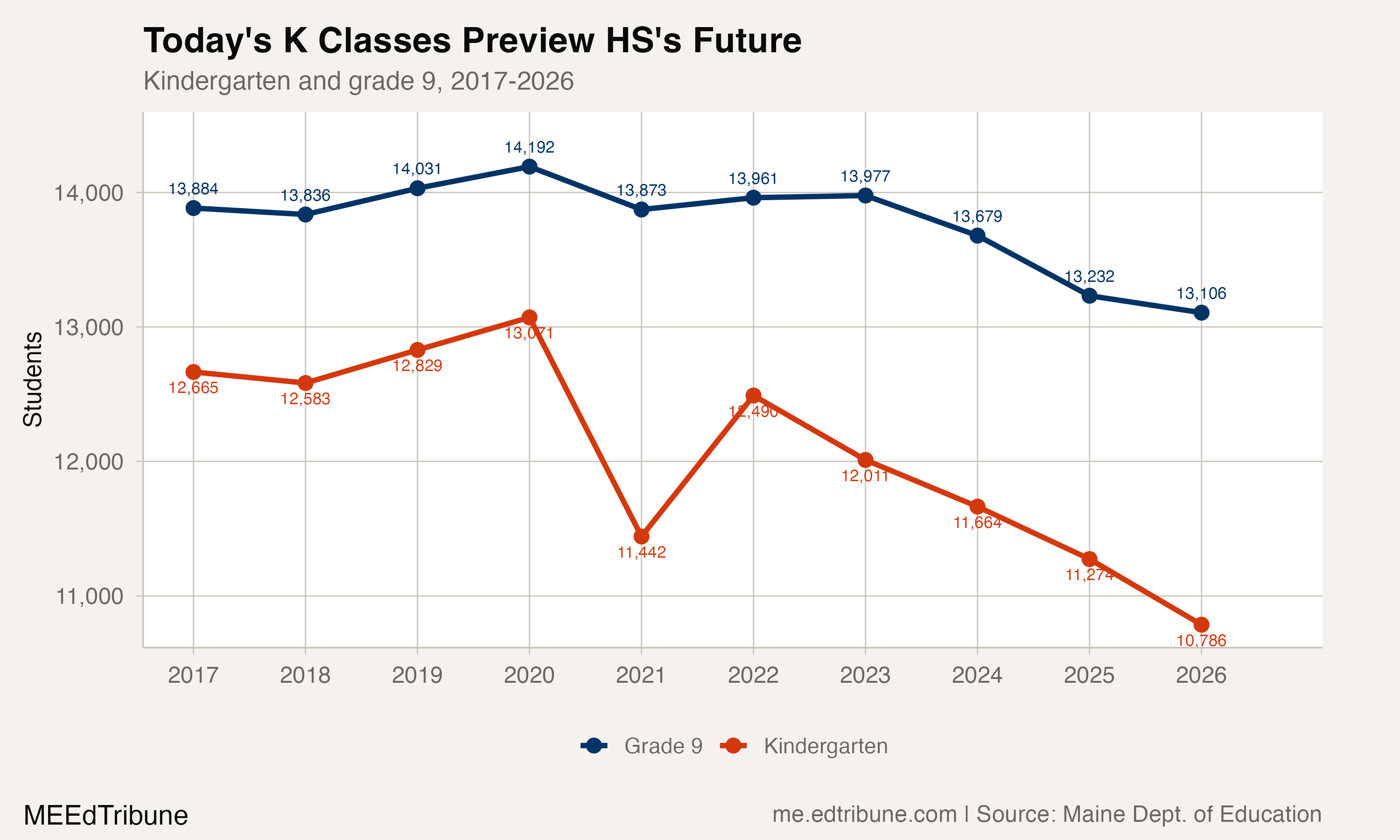
Maine's 9-12 enrollment has barely budged in nine years, falling just 4.3%. But K-8 has lost 11,198 students, and today's kindergarten classes are 2,320 smaller than grade 9.
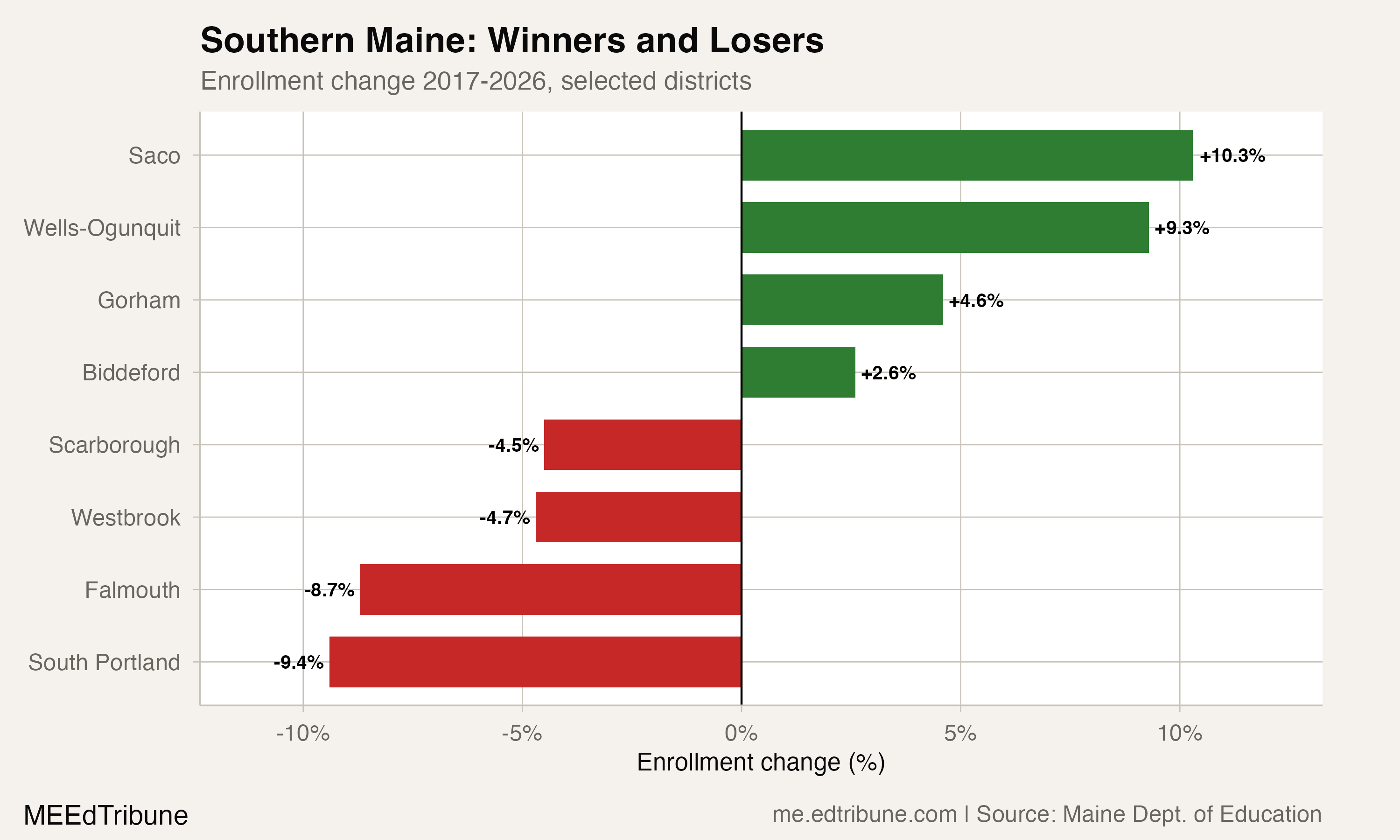
Saco Public Schools added 179 students over nine years, making it the largest traditional district gainer in a state where 88 districts hit all-time lows.
Maine's Black and white students are chronically absent at near-identical rates, a parity rooted in the state's Somali, Congolese, and Sudanese immigrant communities.
Native American chronic absenteeism dropped 14.9 points in two years, the fastest improvement of any racial group, but 39.3% of students still miss too much school.
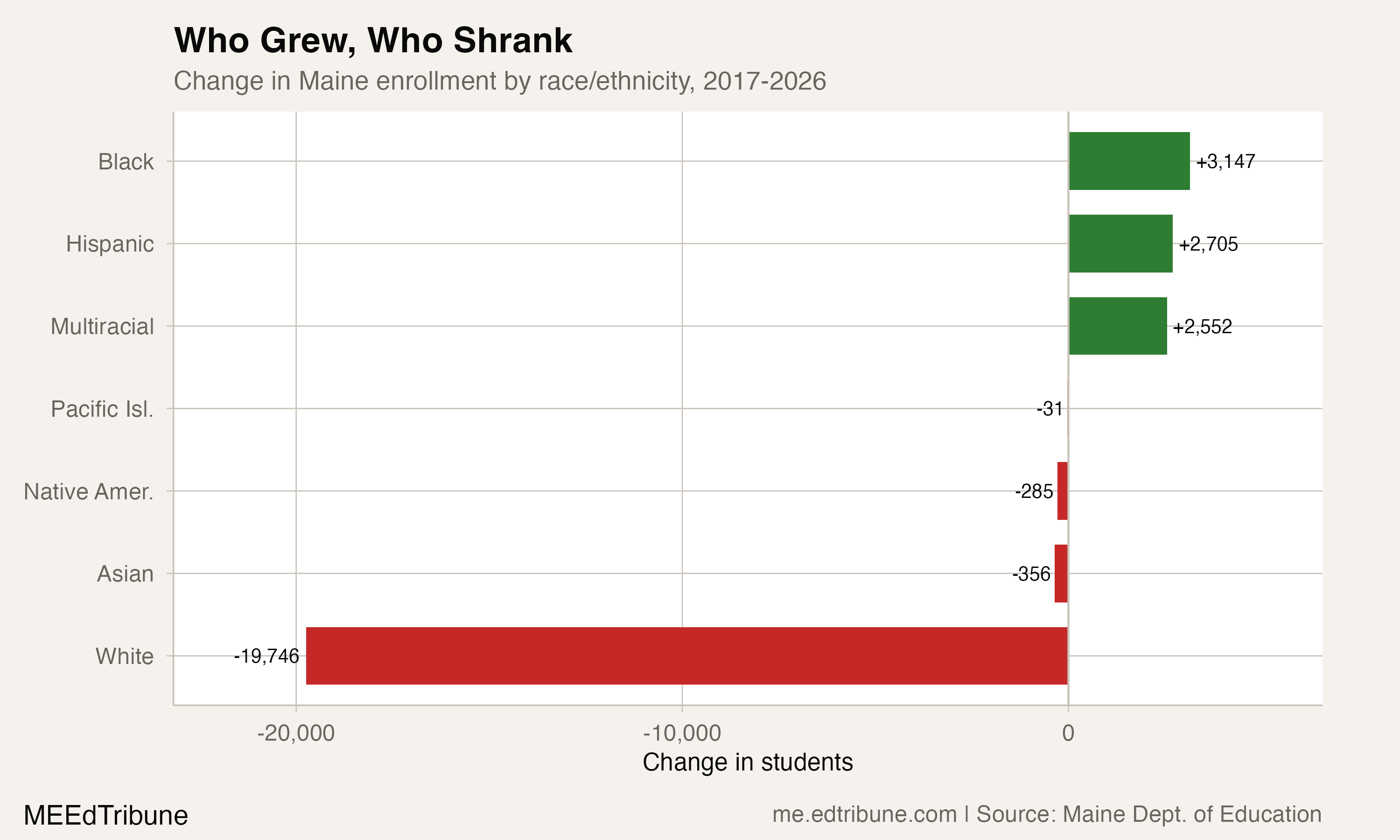
Maine's multiracial enrollment surged 62% in nine years to 6,652. Three growing groups converge as white enrollment sheds nearly 20,000.
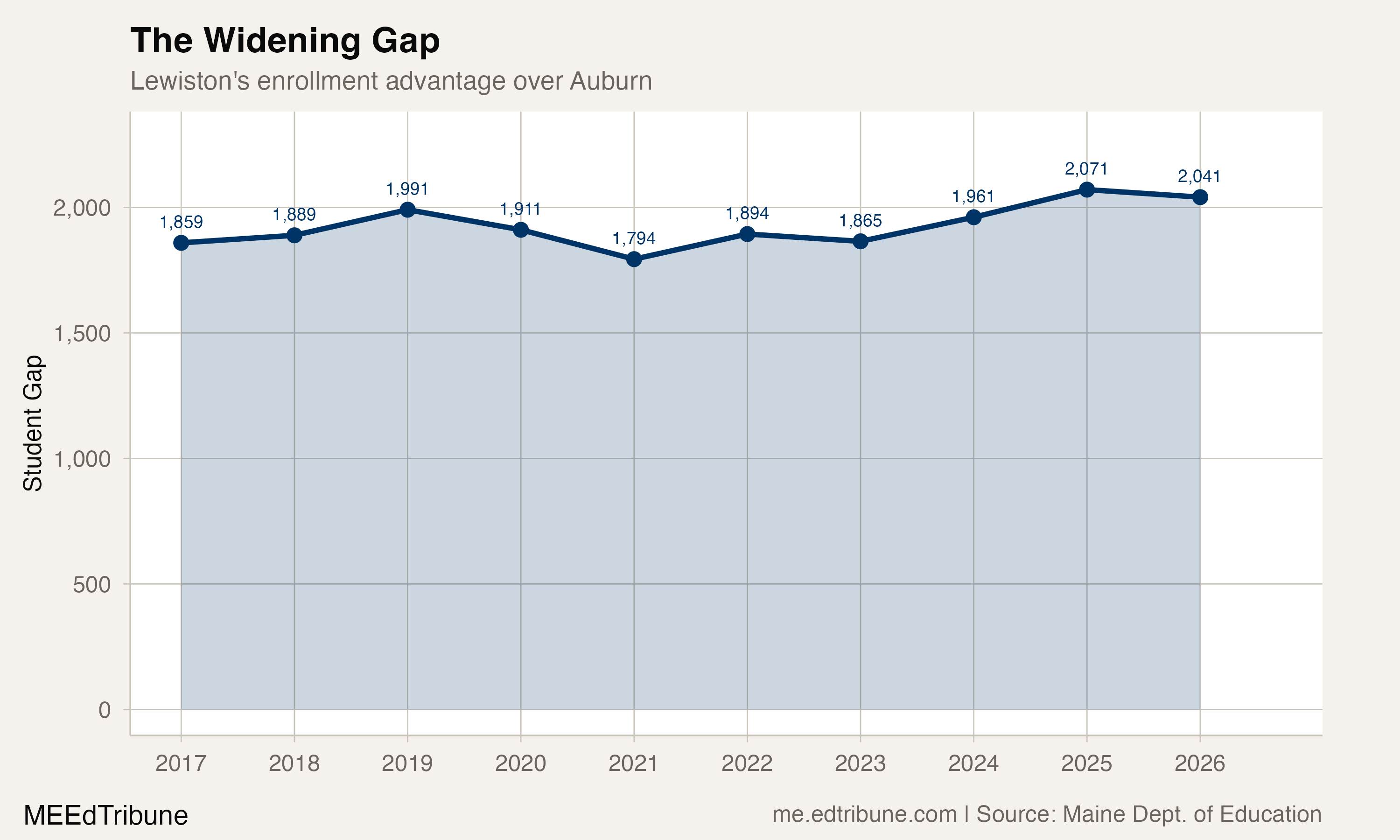
Lewiston's enrollment held within 3% of its 2017 level while twin-city Auburn, separated by a bridge, declined 9.1% over seven years. Immigration is pulling the two cities apart.
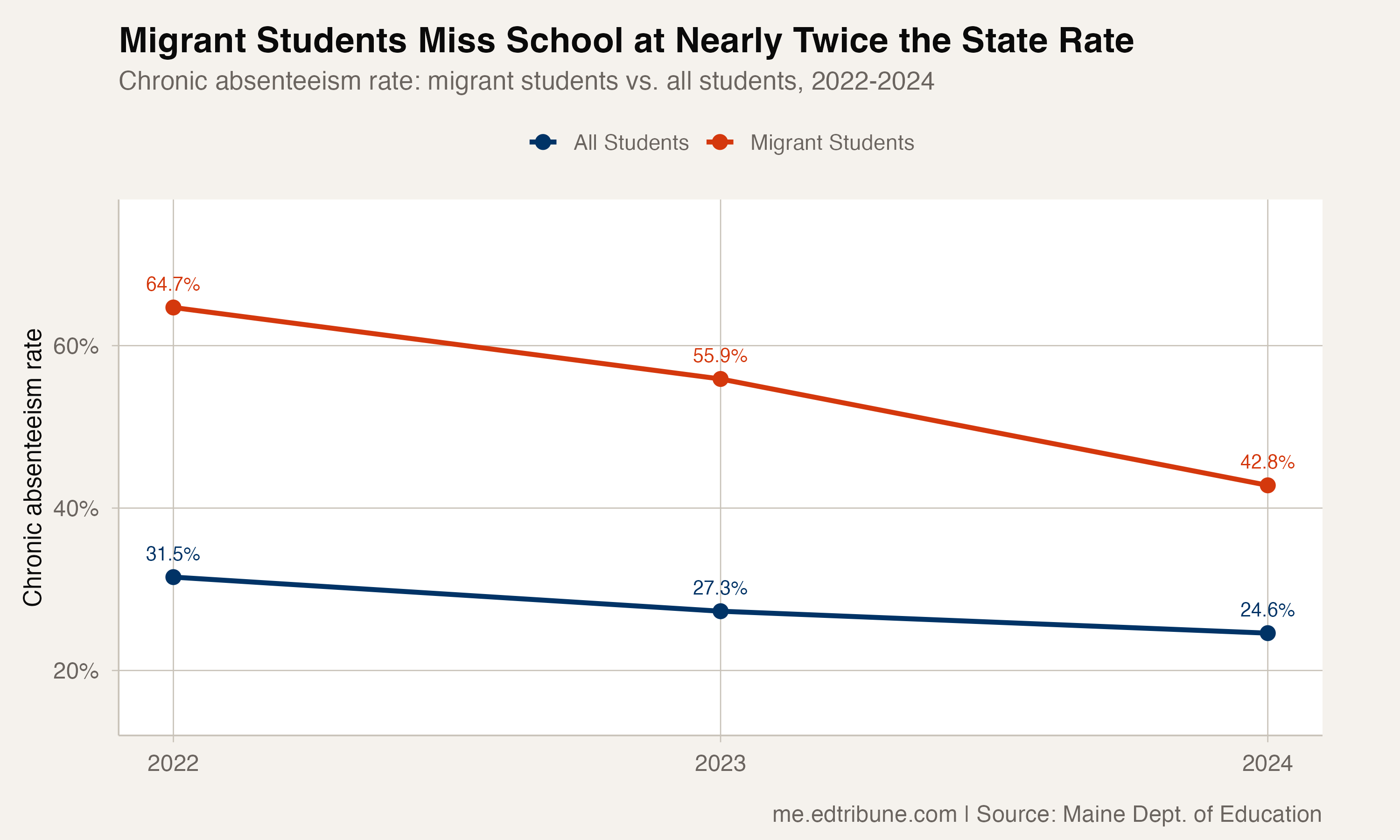
Students from Maine's migrant farmworker families cut chronic absenteeism by 21.9 points from 2022 to 2024, the largest gain of any subgroup.
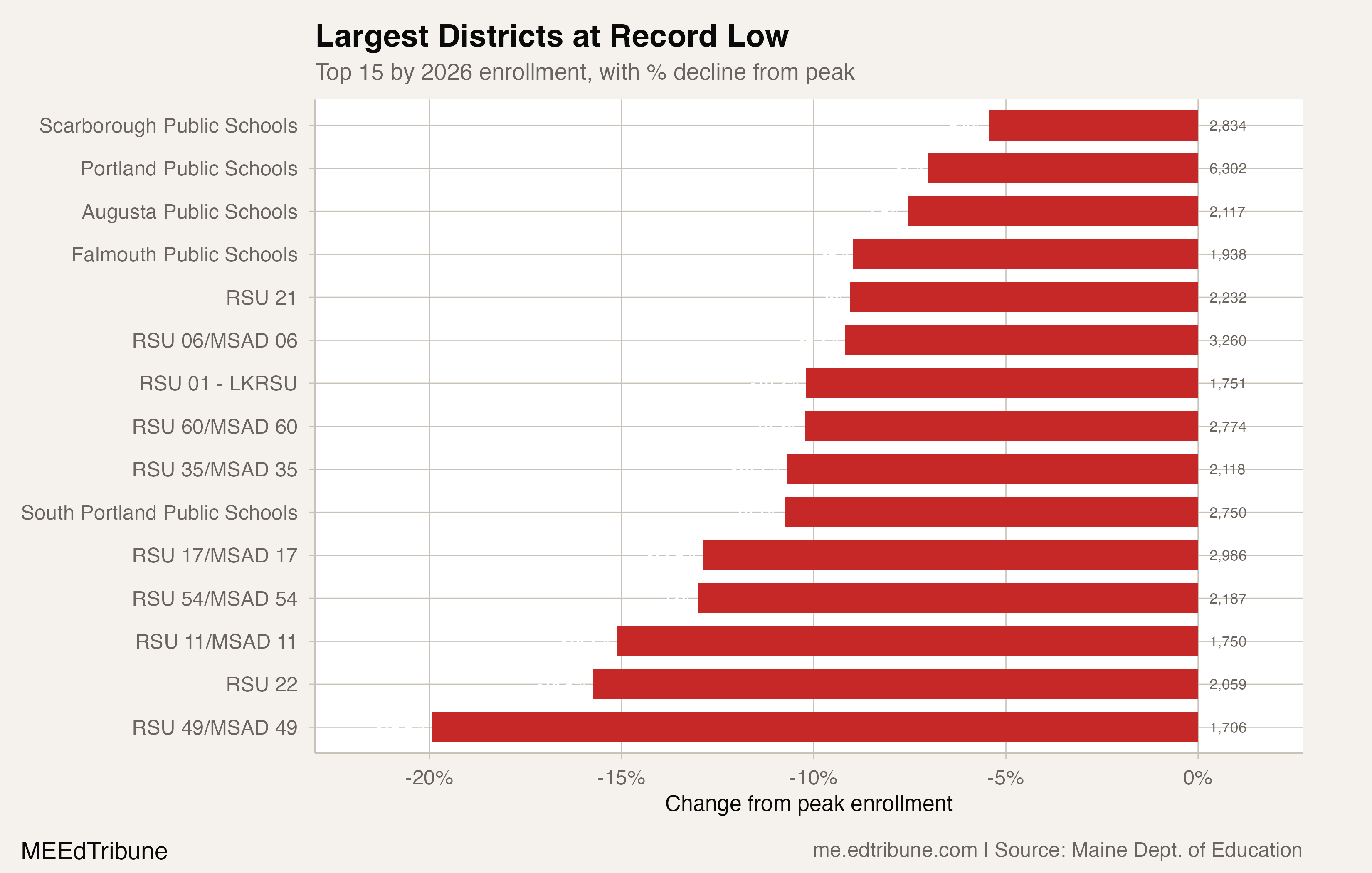
Eighty-three of Maine's 214 districts hit all-time lows in 2026, including Portland, as three years of accelerating decline force budget cuts statewide.
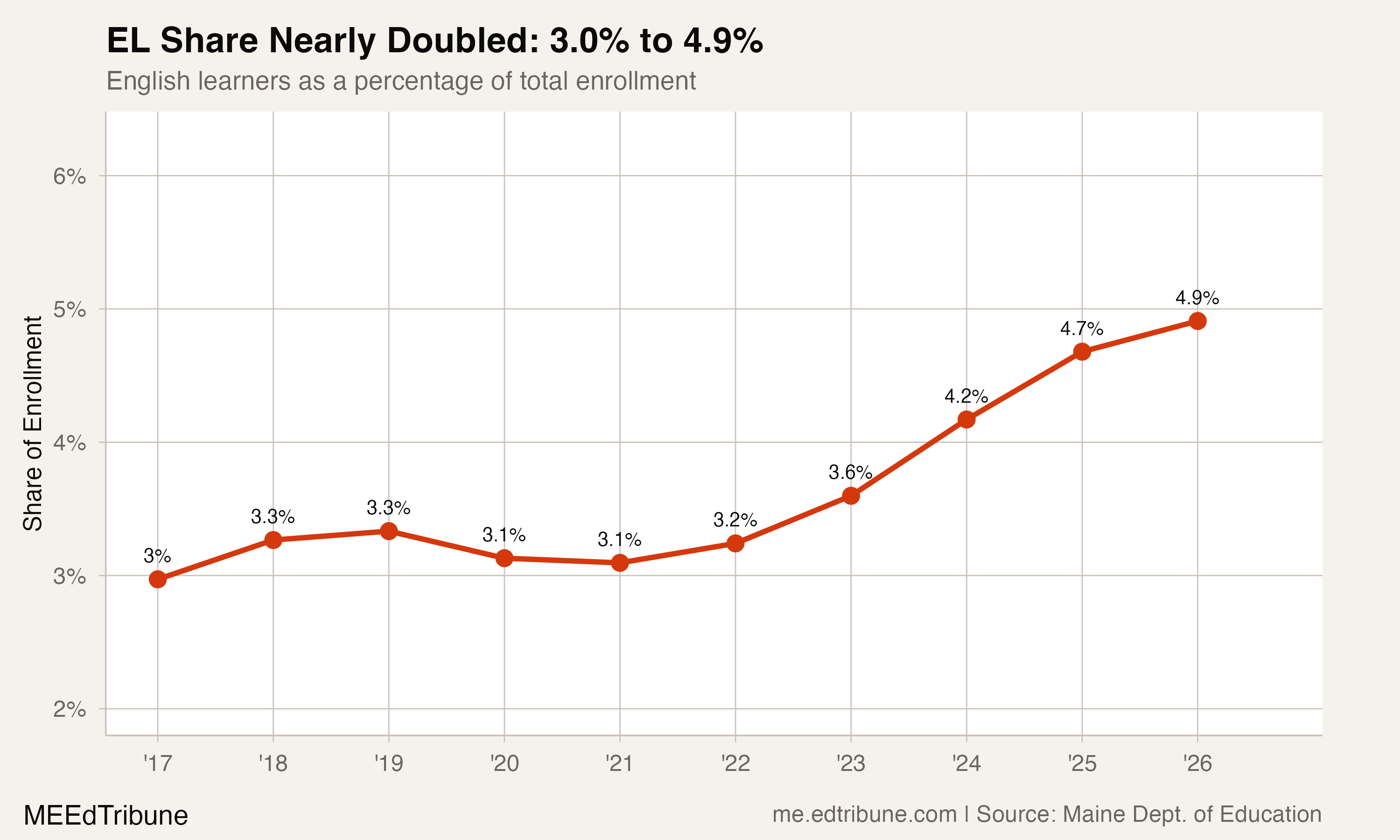
Maine's English learner population surged 54% in nine years even as total enrollment fell, driven by refugee resettlement and asylum seekers in Portland and Lewiston.
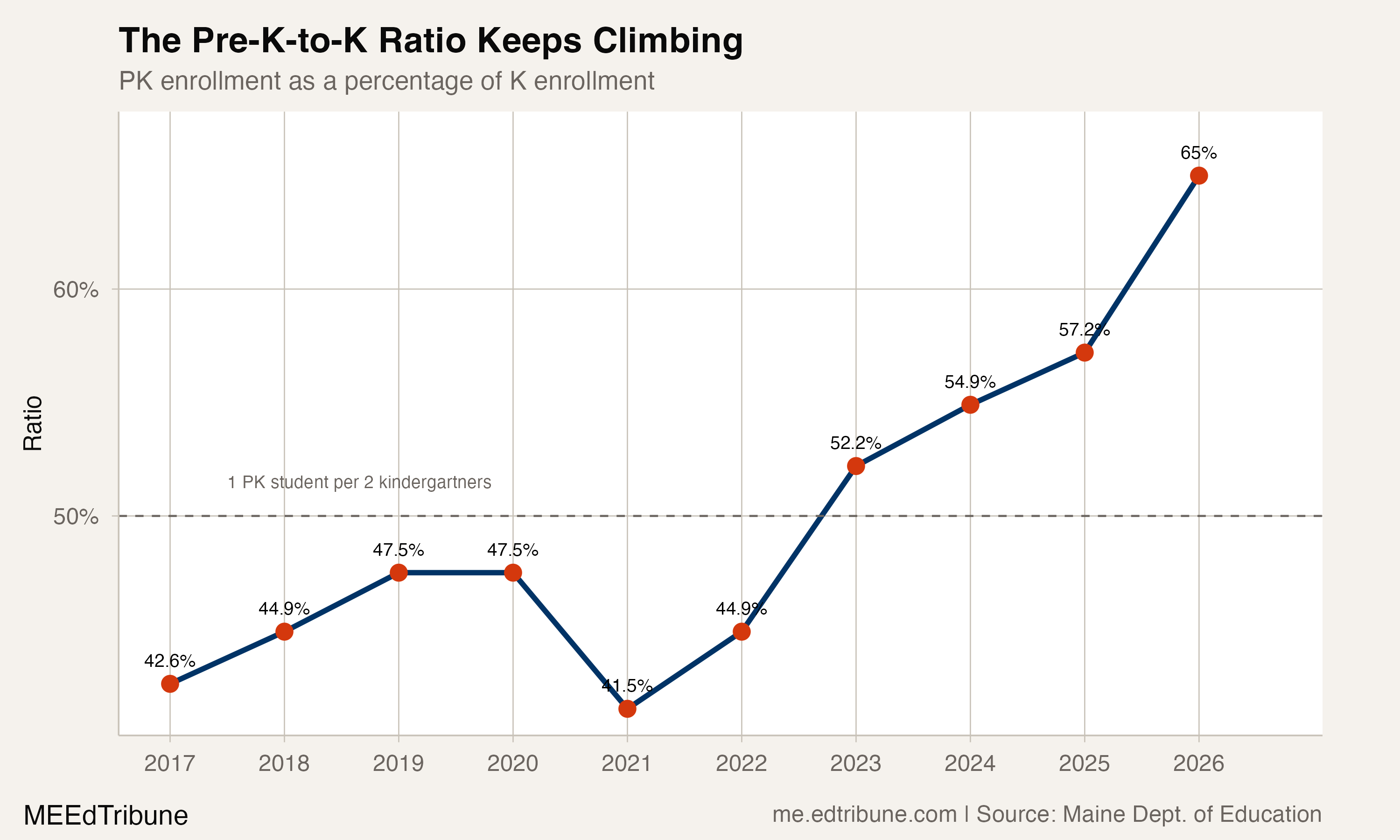
Maine's pre-K enrollment surged 30% while kindergarten fell 14.8%, the steepest grade-level decline in the state. The divergence reveals a policy success colliding with a demographic wall.
Five years after the pandemic, only 47 of 214 Maine districts have regained pre-COVID enrollment. The state is 11,436 students below its projected trajectory.
Maine lost 2,134 students in 2025-26, the worst non-COVID year on record. Three years of losses have erased the post-pandemic bounce.
Maine's second-largest district has added students three years running, driven by immigrant families remaking a former mill town even as the state hits an enrollment low.